The Makerfield By-election and the Labour Leadership Contest: Could Andy Burnham be elected as an MP?
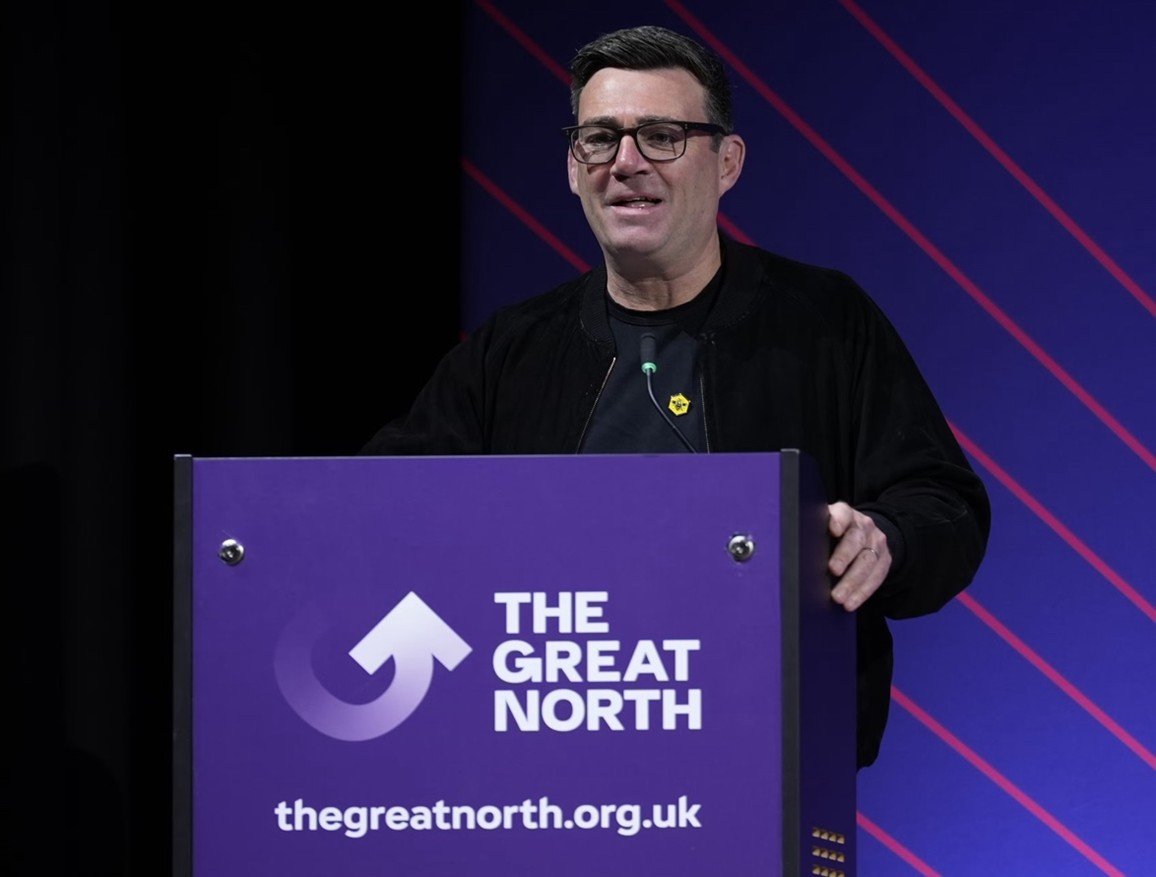
Pictured: Andy Burnham | Source: The Independent
Introduction
A by-election for the United Kingdom parliamentary constituency of Makerfield is due to be held on 18 June 2026, following the resignation of Labour MP Josh Simons. As a result of his resignation, Andy Burnham, Mayor of Greater Manchester, has been cleared to stand for a seat in Parliament. It is the first time in UK history that a by-election has been triggered specifically to provide a seat for someone who is not currently in Parliament since the 1965 Leyton by-election. Simons’ resignation was formalised on 18 May 2026, and a notice of election was published on 20 May 2026, confirming 18 June 2026 as the date for the by-election vote.
What would be the effect of Andy Burnham’s election as an MP?
Andy Burnham’s public support is greatly recognised in the northwest due to his previous success as mayor in 2017. With Makerfield being a Labour-Reform marginal, forecasts find that Burnham’s candidacy is decisive, with the Labour Party hoping his personal popularity in the region can help them stem their losses.
Survation findings show that having Burnham as the Labour candidate would create a 67% probability of the Labour Party winning, with 45% in favour of Labour and 42% in favour of Reform UK. However, the probability of Labour winning drastically drops to 0% when having any other candidate other than Burnham, with 53% in favour of Reform UK and only 27% in favour of Labour.[1] These statistics demonstrate major support for Andy Burnham’s candidacy as MP. If elected, Burnham would be required by law to step down as mayor of Greater Manchester under the terms of the English Devolution and Community Empowerment Act 2026, triggering a mayoral by-election.
As a direct consequence, a win for Andy Burnham would set off a Labour leadership contest, as Burnham would most certainly challenge Keir Starmer for the Labour leadership. This could potentially reshape the Labour Party, since around 30 Labour MPs have called for a change in leadership or a timetable for Keir Starmer to resign. Consequently, if Andy Burnham were to win this by-election, it would increase the pressure on Starmer to step down. However, this has been widely interpreted by citizens and the media as a stepping stone for Burnham to take over as Labour leader.
The legal framework around the mayoralty rule: Can a mayor be an MP?
In general terms, the mayor of Greater Manchester is prohibited from being an MP. If successfully elected, Burnham would be required by law to resign as Mayor of Greater Manchester. This requirement is a relatively new rule set in place under the English Devolution and Community Empowerment Act 2026. Section 17 (5) of the Act states that, if a strategic authority mayor becomes an MP, they must resign their position as mayor within eight days of being elected to the House of Commons[2]. However, this section does not officially come into force until 29 June 2026, meaning that it will not apply for the Makerfield by-election. This Act was designed to prevent an individual from holding both a parliamentary seat and a metro mayoralty simultaneously, mainly because a dual mandate could raise concerns about conflict of interest and accountability.
As a result, the legal authority governing the upcoming by-election falls back on Section 67 of the Police Reform and Social Responsibility Act 2011, which states that if a mayor with Police and Crime Commissioner (PCC) powers becomes an MP, they are automatically disqualified as a mayor. A mayor is also the PCC for Greater Manchester, meaning that they would immediately cease to be mayor as soon as they won a seat in the House of Commons.
If Burnham were to be elected as an MP, he would be required by law to step down as mayor of Greater Manchester, triggering a mayoral by-election. As a consequence, Greater Manchester would suddenly face two simultaneous by-elections, the Makerfield parliamentary by-election and a Greater Manchester mayoral by-election. This is seen as an extraordinary political situation, putting Labour under extreme pressure to win both contests in an environment where they are already under severe pressure from Reform UK and the Green Party.
The Political Risk for Labour
This is arguably the most consequential effect of Andy Burnham’s resignation as mayor of Greater Manchester. It is important to consider that Reform UK has won all eight council wards in the Makerfield constituency with around 50% of the vote in the recent local elections. However, Greater Manchester as a whole has been shifting politically, and Burnham’s personal popularity is the one thing that prevents Reform UK from successfully entering this region. Based on the numerous polls in favour of Burnham, Labour could possibly win the Makerfield by-election; however, an unintended consequence could also be losing the Greater Manchester mayoralty to Reform UK in the subsequent by-election. Even with Makerfield being a safe seat for the Labour Party since its creation in 1983, a loss of this mayoralty by-election would hand Reform UK one of the most powerful directly elected regional offices in England.
The Broader Devolution Question
There is a crucial and wider constitutional point to consider here. The fact that a mayor can vacate office mid-term to pursue a parliamentary career could be argued to undermine the integrity of English devolution. It raises policy questions around the topic of whether the legal framework adequately protects the mandate of the electorate who voted for Andy Burnham as mayor. Citizens who voted for and supported Burnham as Mayor of Greater Manchester, view this as a betrayal of their vote and may feel that he is letting them down by giving up his mayoral seat for a seat in Parliament. It also raises concerns about the principle that devolved or regional institutions should function consistently without interruption, even if not expressly stated in the English devolution. This change in regional governance could have negative consequences for Greater Manchester; even with Deputy Mayor Beverley Hughes stepping in, her powers may be more limited in certain areas compared to Burnham’s legal powers, due to the Deputy Mayor naturally having a narrower mandate.
However, this argument could potentially be challenged, as given that Section 17 (5) of the English Devolution and Community Empowerment Act 2026 does not come into force until 29 June 2026, there could be no operative statutory provision requiring him to vacate his seat as Mayor of Greater Manchester. Additionally, judicial review could be sought regarding any administrative decisions claiming to require his resignation, such as Section 67 of the Police Reform and Social Responsibility Act 2011.
Therefore, there appears to be a significant legal gap that has not been fully discussed regarding the commencement date of 29 June.
The legal framework around the rules in place for the resignation of an MP
The legal framework governing MP resignation is based on an old rule rooted in the 1623 Resolution of the House of Commons, which provides that MPs cannot directly resign. Instead, they apply for appointment to the nominal office of the Chiltern Hundreds under the House of Commons Disqualification Act 1975, which, in principle, automatically vacates their seat. There is no statutory requirement in place to give a particular reason, no parliamentary scrutiny of the decision and, most importantly, no legal mechanism for constituents to challenge it. In the case of Josh Simons, this means that despite openly resigning to allow Burnham to stand for a seat in Parliament, this process was entirely lawful, even if it is considered undemocratic.
Many citizens who voted for Josh Simons in the 2024 Makerfield election had no say in his replacement and feel as if this is a betrayal of their right to vote. Additionally, with the NEC effectively imposing Andy Burnham and bypassing other local party members, the whole concept of a competitive democratic contest has been overlooked.
Ultimately, Simons' resignation highlights a significant gap in the UK's uncodified constitution. However, it may be difficult to challenge because an attempt to regulate the reasons for an MP’s resignation could risk breaching Article 9 of the Bill of Rights 1689, which under law protects parliamentary proceedings from court interference. Conversely, there is an argument in favour of the upcoming by-election, stating that it will be held to give voters a genuine choice and an opportunity to be heard.
[1] https://cdn.survation.com/wp-content/uploads/2026/05/15164649/Makerfield_Initial_Estimate_Note.pdf
[2] https://commonslibrary.parliament.uk/research-briefings/cbp-10853/