OpenAI’s GPT 5.4 Cyber: The AI Cybersecurity Arms Race Just Got Real
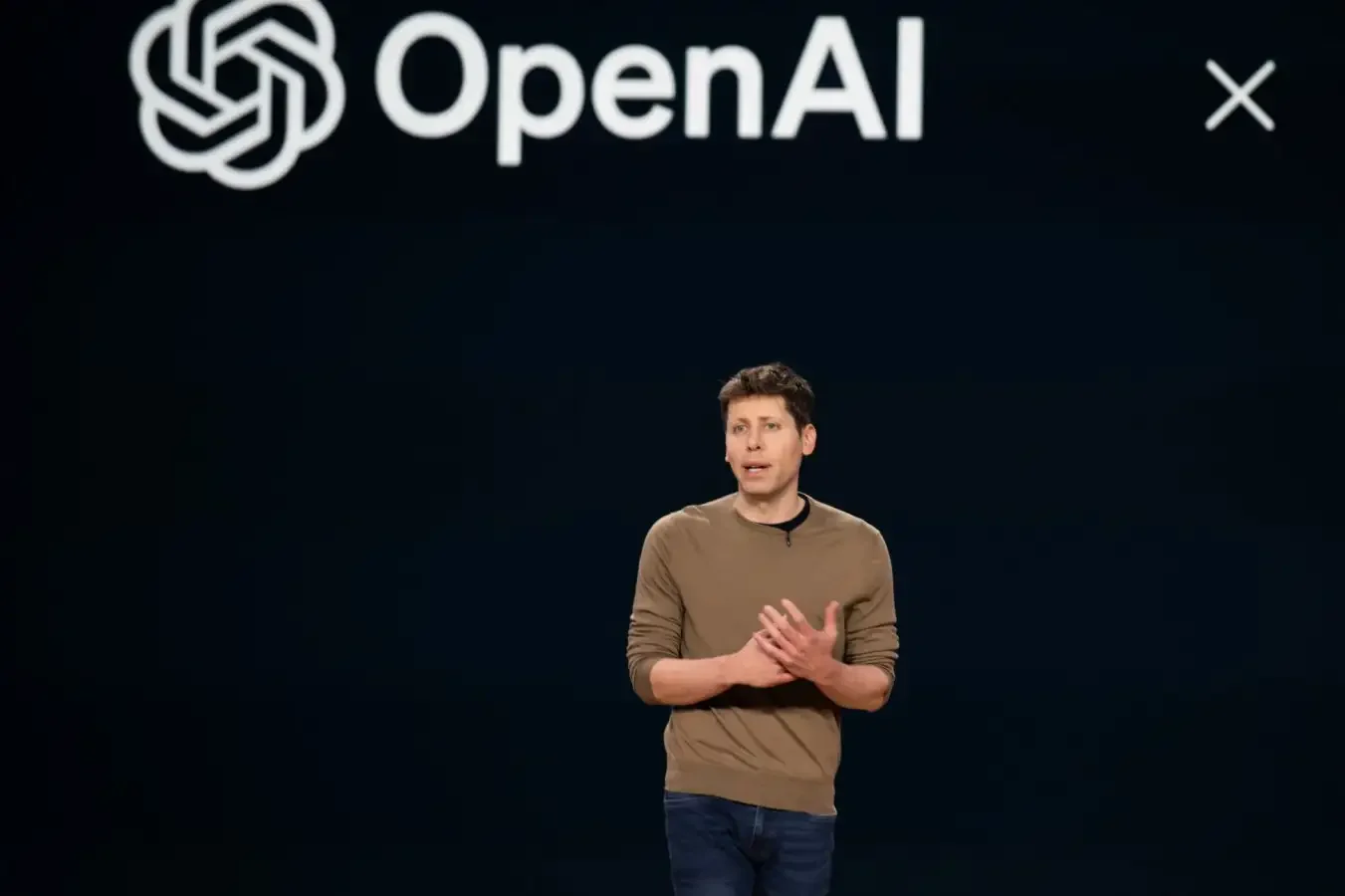
Pictured: Sam Altman | Source: NewScientist
On 14 April 2026, OpenAI announced the limited rollout of GPT-5.4-Cyber, a variant of its GPT-5.4 model fine-tuned specifically for defensive cybersecurity work. The model can reverse-engineer compiled binaries, analyse code for vulnerabilities without access to source, and run autonomous agentic security workflows. It comes with fewer capability restrictions than standard OpenAI models and is not available to the public.
Instead, access is gated through OpenAI's 'Trusted Access for Cyber' (TAC) programme, which the company launched in February 2026. Only vetted cybersecurity professionals, organisations, and researchers, authenticated as legitimate defenders can apply. Initial access goes to hundreds of users, scaling to thousands. Notably, US government agencies are not yet included, though OpenAI says discussions are underway.
Why Now, and Why the Limits?
The timing is not coincidental. One week earlier, Anthropic had released its own advanced cybersecurity model, Mythos, to a curated group of around 40 organisations, making it the first AI company to adopt this kind of deliberately restricted deployment for a frontier model. OpenAI's rollout is broader, but the underlying logic is identical: models have crossed a capability threshold where unrestricted deployment would give bad actors, not just defenders, a material advantage.
"You can't stop models from doing code enumeration or finding flaws in older codebases. That capability exists now. It's only a matter of weeks or months before there's a new model with similar capabilities out in the wild." — Rob T. Lee, Chief AI Officer, SANS Institute
OpenAI's own Preparedness Framework confirms the trajectory: capture-the-flag benchmark performance across its models jumped from 27% on GPT-5 in August 2025 to 76% on GPT-5.1-Codex-Max just three months later. The company now plans and evaluates future releases 'as though each new model could reach High levels of cybersecurity capability.' That is a remarkable thing for an AI company to say publicly and a significant signal to regulators.
The Bigger Picture for UK Financial Services
For the FCA and PRA, the GPT-5.4-Cyber launch crystallises a question that PS26/2 (the FCA's operational incident and third-party reporting framework, in force from March 2027) is partly designed to address: how do regulated firms manage third-party AI dependencies when those dependencies are simultaneously their biggest defensive asset and a potential systemic vulnerability? The answer OpenAI and Anthropic are settling on identity-verified, tiered access with monitoring is essentially the AI equivalent of responsible vulnerability disclosure. It is imperfect and will not hold forever, but it reflects a maturing approach to AI risk governance that financial regulators should track closely.
More immediately: any financial services firm that relies on software systems, which is to say, every financial services firm now has access to AI-assisted vulnerability scanning through programmes like this. Those that use it defensively, proactively identifying weaknesses in their own systems, will be better positioned than those that wait for an incident. That is a clear operational risk management action item, not just a technology story.
The Legal Angle: Liability, Weaponisation and the Governance Gap
The controlled release of GPT-5.4-Cyber raises questions that lawyers are only beginning to work through. Who bears legal responsibility when an AI model used under a 'defensive' access programme is turned to offensive use either by the authorised user or through credential theft? OpenAI's Trusted Access for Cyber programme imposes identity verification and monitoring, but it does not eliminate the risk of misuse.
The legal precedent for AI-facilitated cyber harm is thin: there is no established UK tort of 'deploying AI that was foreseeably misused,' but the Consumer Protection Act 1987, general negligence principles and the emerging framework of AI liability under the Product Liability Directive 2025 all provide potential grounds for civil claims if harm results.
The pace of technological development is outstripping legal doctrine, leaving a complex and uncertain regulatory landscape that courts and lawmakers will soon be forced to confront.
The Under-16 Social Media Ban: Britain’s Growing Appetite for Australia’s Experiment
From Australia’s December 2025 rollout to the UK’s live consultation, the global momentum is building, the evidence is incomplete and the stakes are enormous.
On 10 December 2025, Australia became the first country in the world to ban children under 16 from social media. By February 2026, platforms had terminated or restricted 4.7 million accounts. By late March, the Australian eSafety Commissioner had launched enforcement investigations into Facebook, Instagram, Snapchat, TikTok, and YouTube for non-compliance, teens were still finding ways through, using VPNs, alternate platforms, and gaming the age verification systems. It was messy, imperfect, and politically popular anyway. And now the UK is watching.
On 2 March 2026, the UK government opened a consultation called 'Growing Up in the Online World', explicitly seeking views on whether a social media ban for under-16s should be introduced. The consultation closes 26 May 2026. Meanwhile, the Children's Wellbeing and Schools Bill has been ping-ponging between the Lords and Commons on exactly this question: Lord Nash's amendment to introduce a ban was passed in the Lords by 266 to 141 votes on 25 March; the Commons defeated it; as of mid-April the bill is still bouncing.
The Case For
The evidence base for harm is substantial. Research links heavy social media use particularly among teenage girls, to depression, anxiety, eating disorders, and self-harm. Australia's study found that 96% of children aged 10-15 used social media, and 70% had encountered harmful content. The parents of Brianna Ghey, the 16-year-old murdered in 2023 after being groomed online, have written directly to the Prime Minister supporting a ban. More than 65 leading UK climate and health scientists signed an open letter on the issue. The Conservatives under Kemi Badenoch have adopted it as party policy. Even Labour MPs, over 60 of them have written to Starmer in support.
The Case Against
Critics, including LSE Professor Sonia Livingstone and Oxford Internet Institute's Dr Victoria Nash, argue that a ban is a blunt instrument that may push children toward less regulated corners of the internet rather than off it entirely. Reddit's legal challenge in Australia argues the ban infringes on young people's right to political speech. Amnesty International has called it an 'ineffective quick fix.' UNICEF Australia noted the positive aspects of social media for young people, community, connection, education. The practical reality in Australia is sobering: compliance is incomplete, age verification is being gamed, and we don't yet know whether mental health outcomes are improving.
Six EU nations have formed a coalition to coordinate bans across Europe. France has passed a ban for under-15s, targeting full operation by September 2026. The global momentum is real even if the evidence base for effectiveness is still incomplete.
What it Means for Regulated Tech and Financial Firms
For financial services firms, the relevance is twofold. First, financial promotions: the Online Safety Act 2023 already imposes obligations on platforms to restrict harmful financial promotion content, a ban that tightens age verification across all social media will increase the friction that financial firms face in targeting younger demographic groups. Second, the direction of travel is clear for fintechs and digital banks that rely on social media for customer acquisition: the regulatory environment around under-16 digital engagement is tightening globally, and product design and marketing strategies need to reflect that now, not after legislation passes.